Government of India
 More
More

Our Blogs

When Question Papers Reveal More Than Answers: Rethinking Assessment Through PARAKH’s Taxonomy
-
2026-03-11 12:00:00
-
Parakh NCERT
- By Indrani Bhaduri
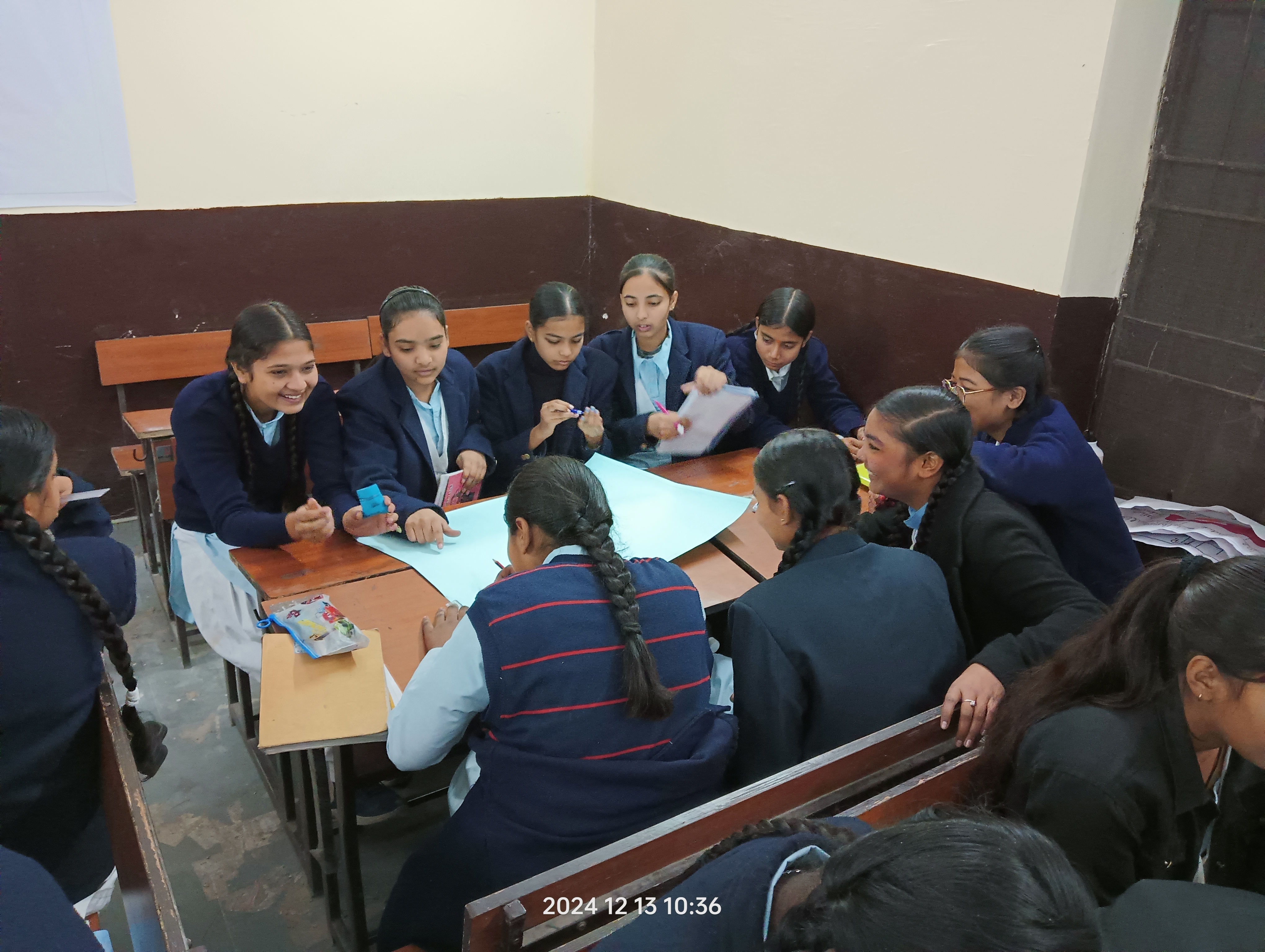
During a recent workshop conducted by PARAKH with teachers and question paper setters at the secondary level, the participants were asked to analyze previous year question papers from their respective state boards. Initially, the exercise generated considerable enthusiasm. Teachers began examining the structure of the papers, categorizing questions, and discussing patterns that they observed. However, the enthusiasm soon gave way to a surprising realization. As the teachers categorized questions according to PARAKH’s taxonomy, an uncomfortable pattern slowly emerged.
Almost every question seemed to fall into a single category. Awareness
Participants initially checked their analysis again, assuming they might have misclassified a few questions. However, repeated examination produced the same conclusion. Nearly 90% of the questions belonged to the Awareness category, while very few addressed the domains of Sensitivity or Creativity. What began as a routine analytical exercise soon turned into a moment of reflection about what these question papers were actually revealing about classroom practices.
Assessment practices reveal far more than student performance. They provide insight into the nature of classroom teaching, the expectations teachers hold for learners, and the broader philosophy guiding an education system. Question papers, in particular, influence how teachers teach and how students learn. When assessments emphasize recall and reproduction of information, classroom pedagogy often shifts toward memorization. Conversely, when assessments require students to think critically, reflect on experiences, and apply knowledge to real situations, teaching practices tend to evolve accordingly. For this reason, designing balanced question papers is essential for promoting meaningful learning.
The workshop discussion soon moved beyond the numbers. Teachers reflected on the nature of the awareness-based questions they had identified. Most of them asked students to reproduce definitions or provide simple examples from the textbook. Very few questions required students to examine problems in their surroundings, analyze social situations, or propose possible solutions. Within the sensitivity domain, questions that encourage learners to reflect on conflicts, negotiate differing perspectives, or collaborate with others were almost entirely absent. Similarly, the domain of creativity, which involves generating ideas, combining concepts, and demonstrating flexibility in thinking, received little representation.
Participants realized that the structure of the question papers seemed to reflect an underlying assumption: learning acquired in classrooms does not necessarily need to extend beyond the classroom. Whether students apply their knowledge to interpret the world around them, resolve everyday conflicts, or generate new ideas appeared to be outside the scope of the assessment design.
This observation highlights the importance of using structured frameworks such as PARAKH’s taxonomy while designing question papers. Aligning with the vision of holistic education outlined in the NEP 2020, the taxonomy categorizes learning into three broad domains: Awareness, Sensitivity, and Creativity. Awareness focuses on knowledge and understanding of concepts and processes. Sensitivity includes open-mindedness, collaboration, and conflict resolution. Creativity emphasizes the generation of new ideas, flexibility of thinking, and the ability to combine knowledge in novel ways.
Balanced assessments must engage students across all these domains so that question papers capture the full range of learning expected in contemporary education. The PARAKH Equivalence of Assessment Across State Boards Report underscores the need for greater comparability and quality in assessments across boards in India, emphasizing that well-designed question papers can significantly influence the quality of classroom learning.
Integrating PARAKH’s taxonomy into assessment design therefore serves a broader educational purpose. It shifts the focus from rote memorization to thoughtful engagement with knowledge and society. When students are encouraged to analyze situations, reflect on experiences, and generate ideas, assessments become instruments for nurturing critical, reflective, and sensitive citizens. Balanced question papers thus play a crucial role in shaping an education system that is both academically rigorous and socially meaningful.
Explore More
More Than a Report Card: The Idea Behind Holistic Progress Cards
Parakh NCERT
- By Indrani Bhaduri
Holistic Progress Cards invite 6th graders to reflect on their ambitions. Is it too early? Not necessarily.
Parakh NCERT
- By Indrani Bhaduri
Balanced Question Papers: Why Assessment Design Matters
Parakh NCERT
- By Indrani Bhaduri
Aligning Assessment with the Goals of Education
Parakh NCERT
- By Indrani Bhaduri