Government of India
 More
More

Our Blogs

Latest Publications
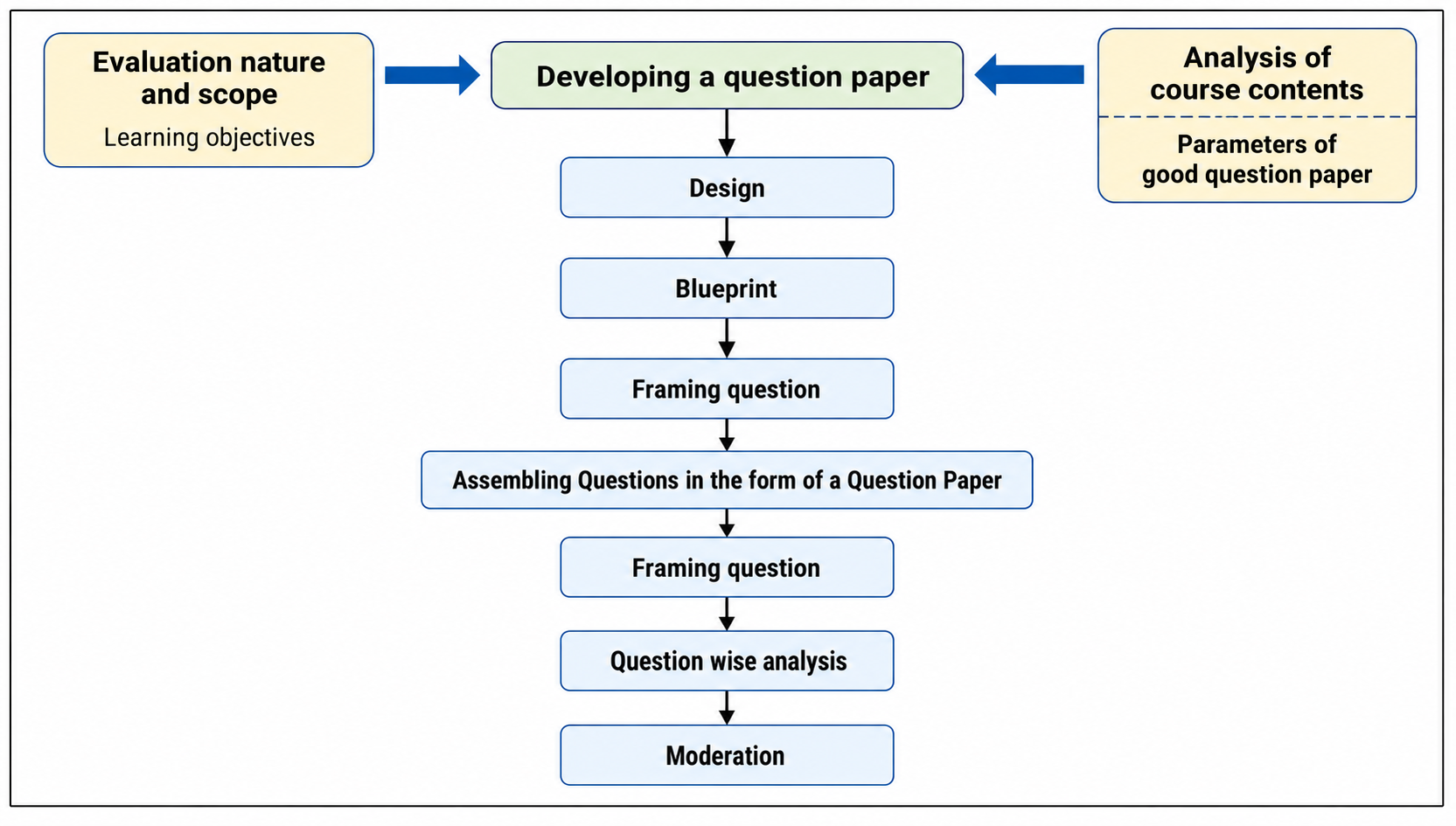
Rethinking Assessment: How PARAKH is Digitising Every Step
Parakh NCERT
- By Indrani Bhaduri
Assessment plays a crucial role in improving learning outcomes. PARAKH (Performance Assessment, Review, and Analysis of Knowledge for Holistic Development), established by NCERT, is working to strengthen assessment practices through digitisation. Thus, reducing dependence on manual processes. It improves efficiency, transparency, accountability, and consistency across the assessment cycle. To support high-quality and competency-based assessments, PARAKH has developed a structured 7-Step Framework. The framework guides every stage of assessment development. Its seven stages include Assessment Design, Blueprint Development, Question Writing, Question Paper Assembly, Scoring Key Preparation, Question Review, and Moderation.
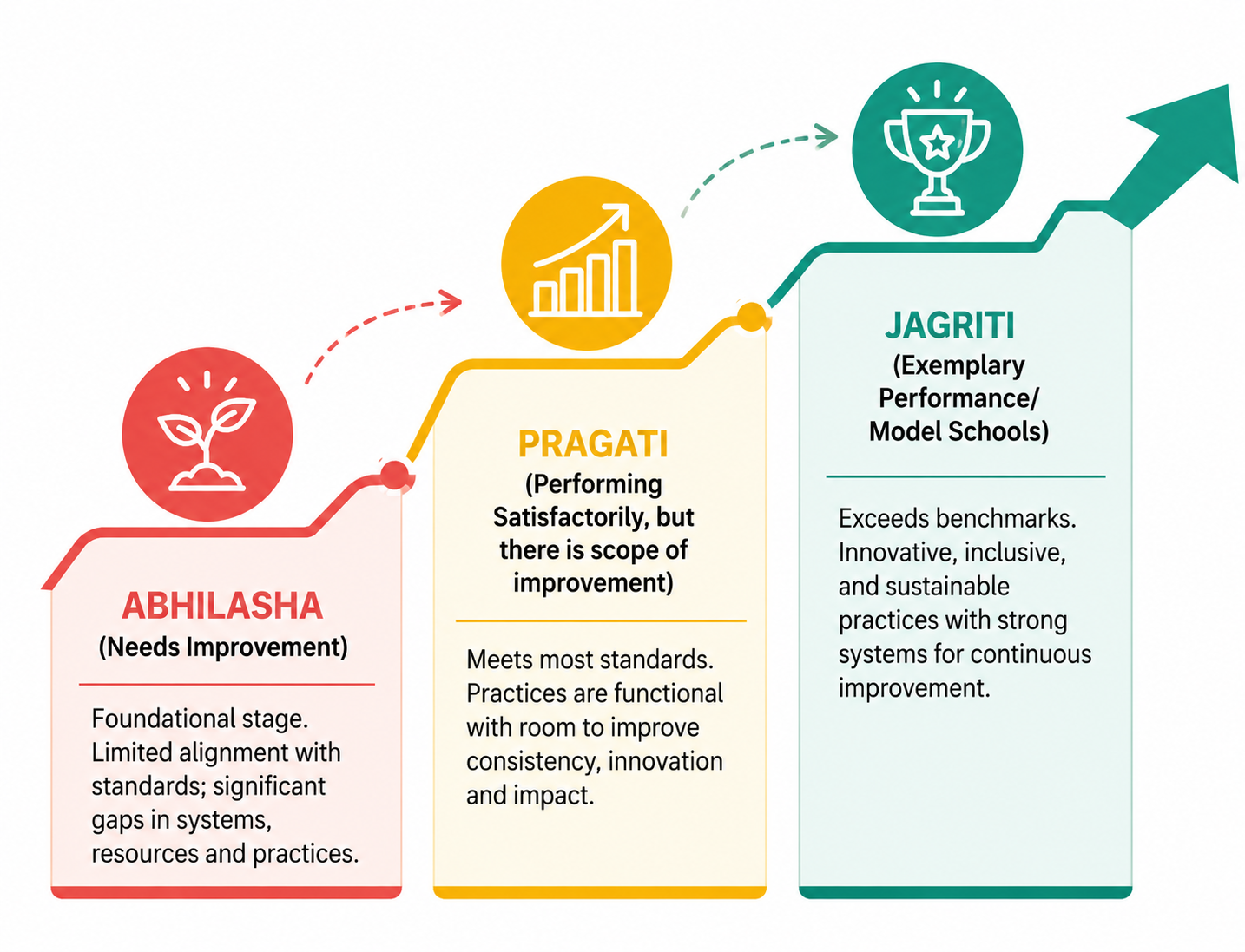
Abhilasha, Pragati and Jagriti :A Roadmap to Educational Excellence
Parakh NCERT
- By Indrani Bhaduri
The School Quality Assessment and Assurance Framework (SQAAF) supports continuous quality improvement in schools. It evaluates school performance across five domains: Administration, Curriculum, Assessment, Infrastructure, and Inclusiveness. SQAAF does not function as a regulatory mechanism. Instead, it promotes self-evaluation and continuous improvement. It uses three developmental performance levels: Abhilasha, Pragati and Jagriti. These levels help schools understand their current status. They also help identify strengths and areas that need improvement. The framework is flexible and can be adopted according to a school's context and readiness. The framework encourages gradual and sustained progress. It promotes innovation, inclusiveness and evidence-based decision-making. Through this process, schools can strengthen their educational practices and improve student learning outcomes. SQAAF ultimately contributes to the development of an equitable, inclusive and future-ready education system.
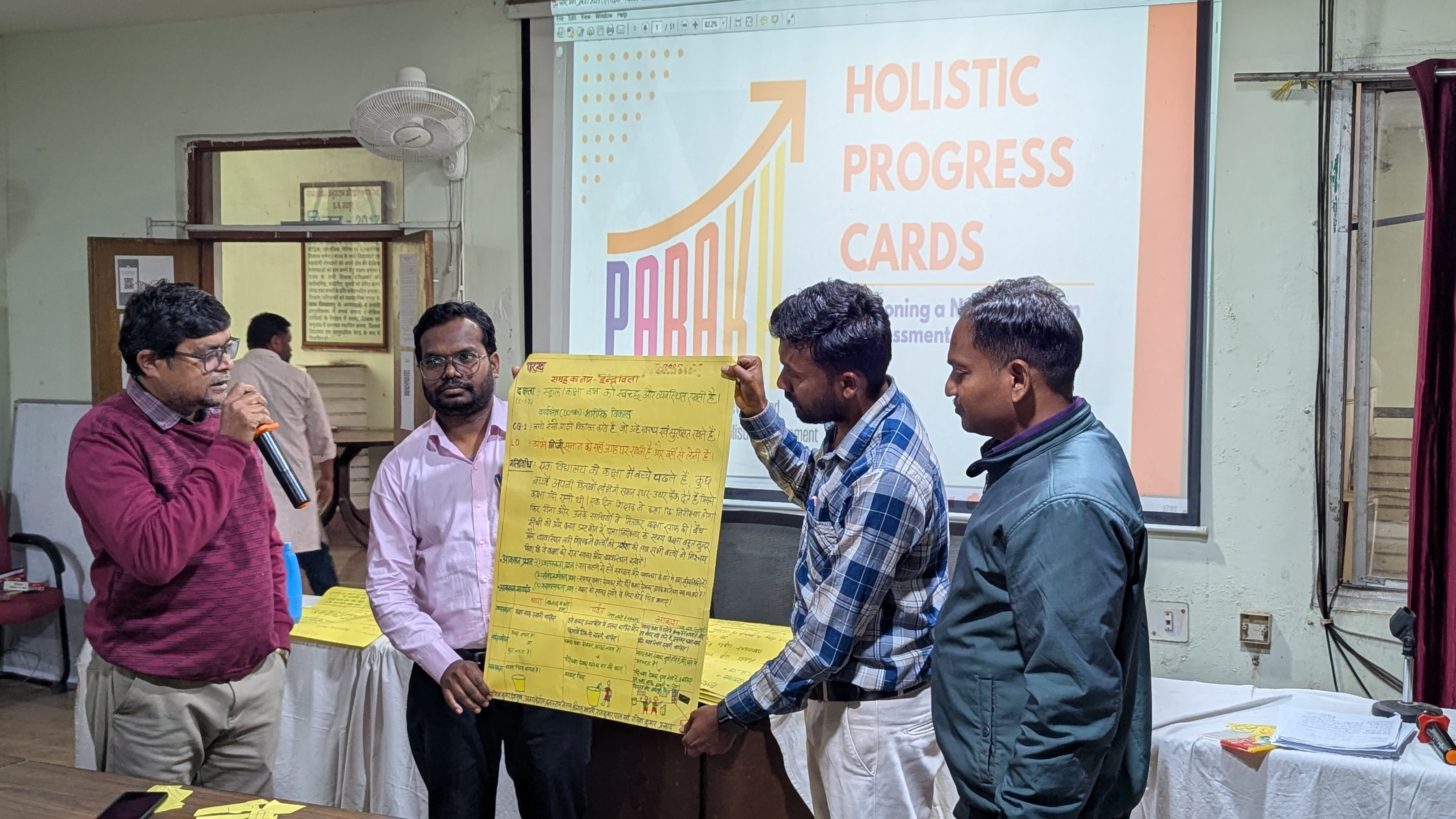
Holistic Progress Cards and Identity Development: From Knowing to Becoming
Parakh NCERT
- By Indrani Bhaduri
The HPC moves beyond viewing learning as the accumulation of knowledge. It recognizes that identity is formed through continuous interaction between what learners experience, how they are perceived, and how they begin to perceive themselves. By capturing multiple dimensions of development, cognitive, socio-emotional, creative, physical, ethical, and cultural, it creates space for learners to be seen in their fullness. This expanded view allows children to recognize strengths that may otherwise remain invisible in a marks or grade-based system.
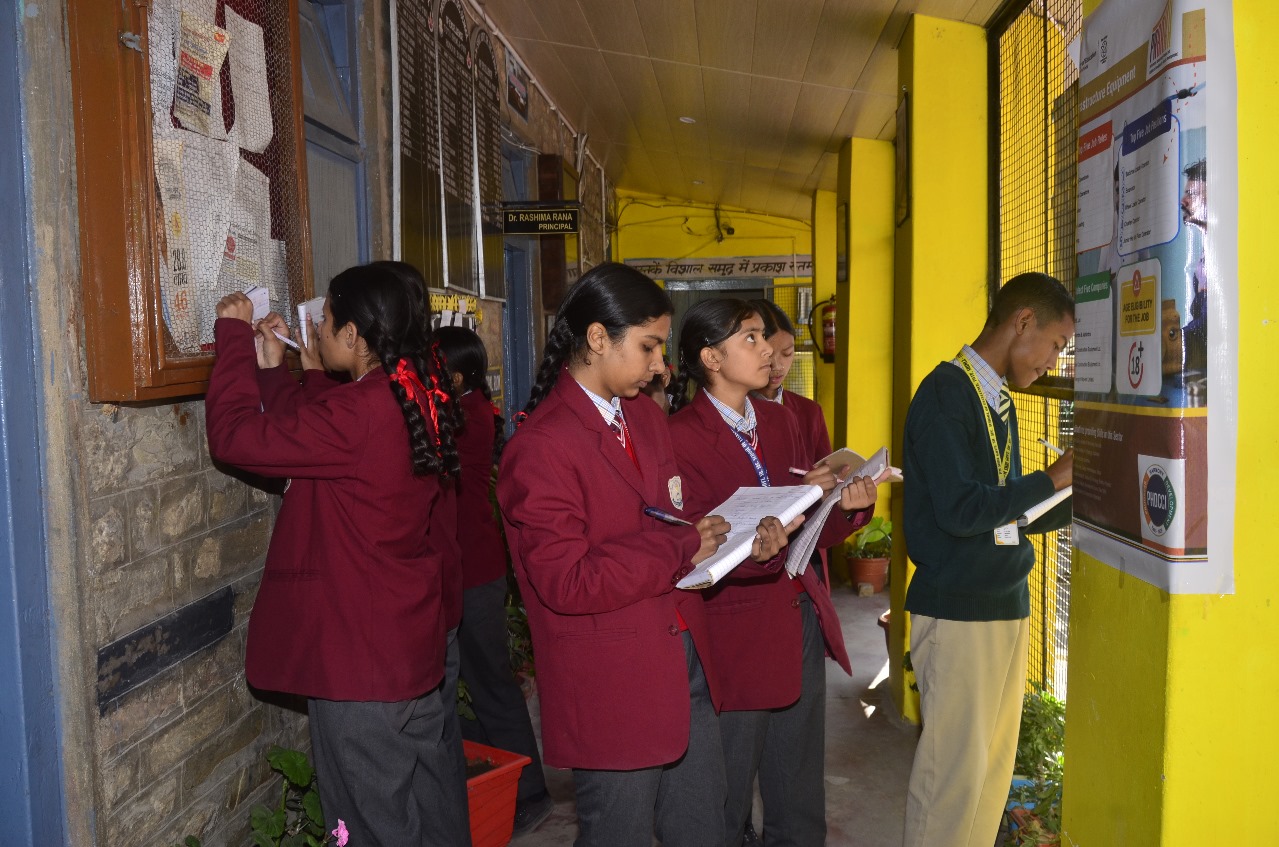
More Than a Report Card: The Idea Behind Holistic Progress Cards
Parakh NCERT
- By Indrani Bhaduri
The Holistic Progress Card (HPC), developed by PARAKH, reimagines assessment by moving beyond marks to capture a child’s holistic development across cognitive, socio-emotional, physical, and creative domains. Aligned with competency-based education and the National Education Policy 2020, it focuses on what learners can do with their knowledge rather than what they can recall. The HPC integrates assessment across awareness, sensitivity, and creativity, and adopts a multi-source approach involving teachers, peers, learners, and parents, including self and peer assessment. By emphasizing descriptive feedback over scores, it transforms assessment into a reflective, participatory process that supports meaningful learning and recognizes each learner’s unique growth.
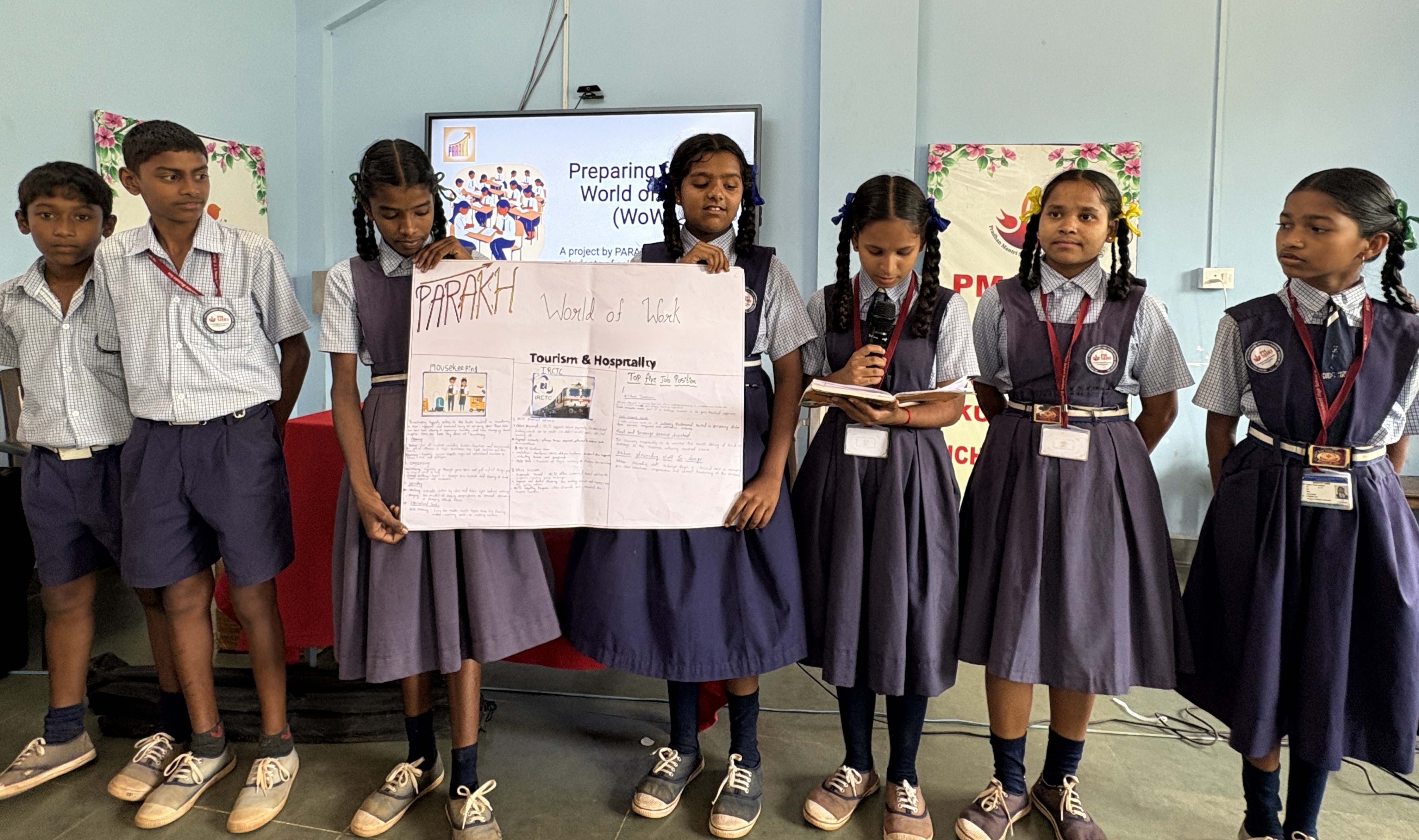
Holistic Progress Cards invite 6th graders to reflect on their ambitions. Is it too early? Not necessarily.
Parakh NCERT
- By Indrani Bhaduri
Holistic Progress Cards invite Grade 6 students to reflect on their ambitions, raising an important question: is it too early? This blog argues that such reflection is both timely and necessary, especially in systems where learning is often driven by rote memorization and exam performance. Many students move through school without a clear sense of purpose, with conversations around education largely focused on grades.
Encouraging students to think about their aspirations helps connect learning to real life. Subjects begin to acquire meaning when students see how knowledge can be used to express ideas, understand community issues, or solve everyday problems. This process also nurtures agency, enabling learners to reflect on their strengths, identify areas for growth, and take greater ownership of their learning.
Importantly, it shifts conversations among teachers, students, and parents towards interests, skills, and purpose rather than just performance. While ambitions may change over time, the habit of reflection is what truly matters. In this way, Holistic Progress Cards support a gradual move towards more meaningful and purposeful learning.
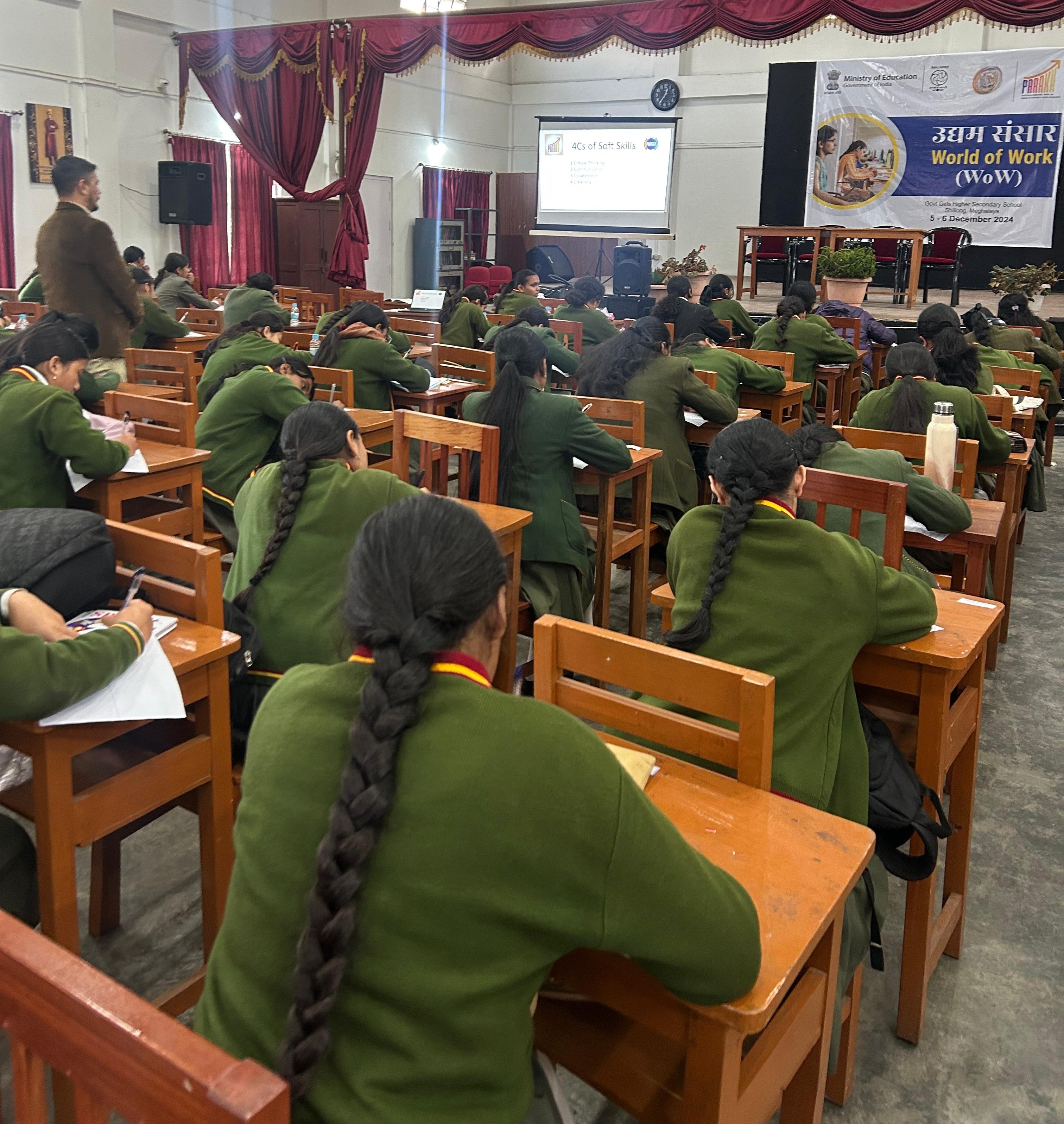
Balanced Question Papers: Why Assessment Design Matters
Parakh NCERT
- By Indrani Bhaduri
Balanced question papers contribute to improving the quality of education. When assessments reflect conceptual understanding, application, creativity, and thoughtful reasoning, teaching practices gradually align with these goals. Students learn that success in examinations depends not only on memorizing information but also on understanding ideas and applying them meaningfully. In this way, improving the design of question papers becomes more than an assessment reform. It becomes a way of transforming classroom learning.
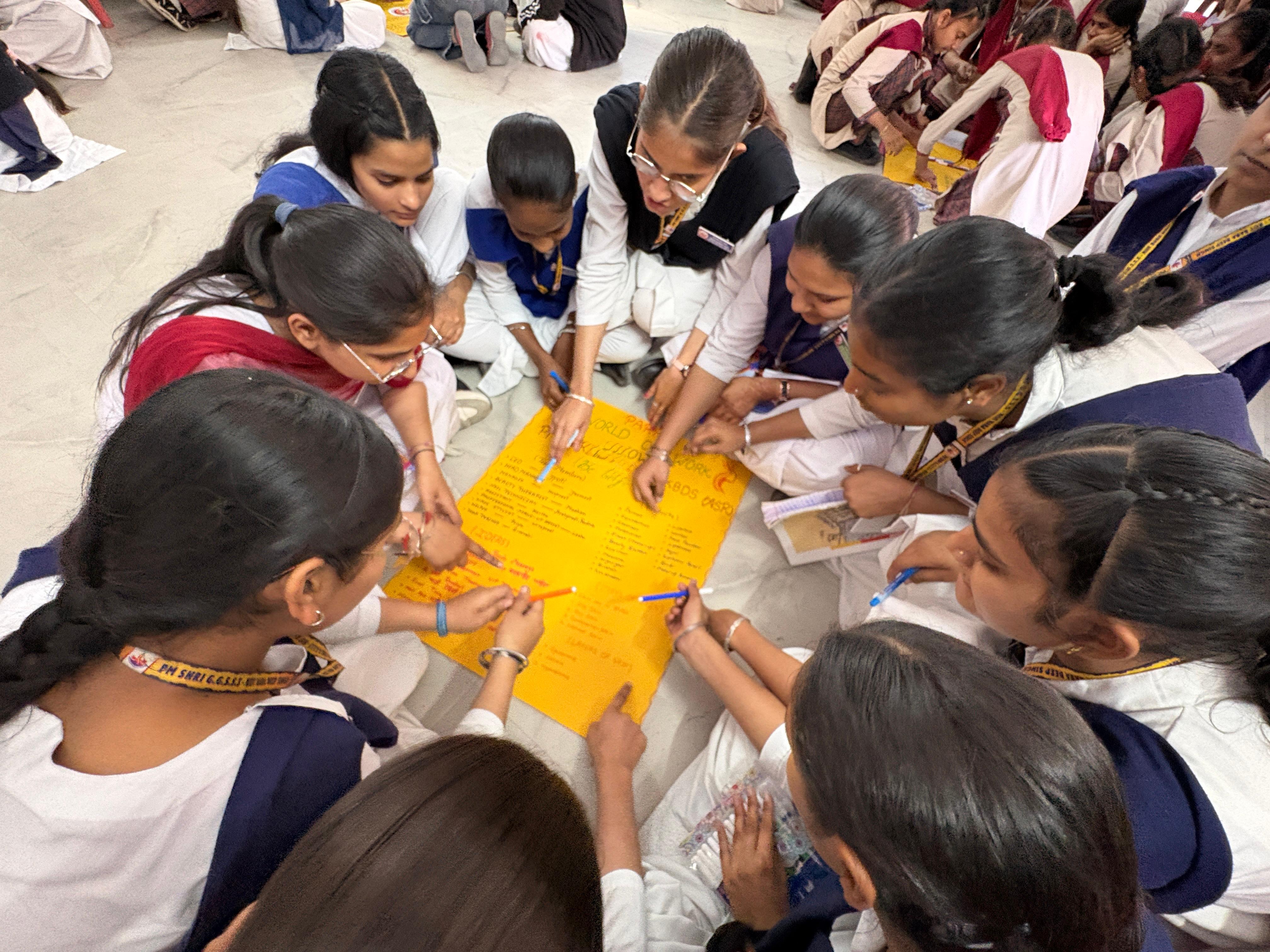
Aligning Assessment with the Goals of Education
Parakh NCERT
- By Indrani Bhaduri
Balanced question papers play a significant role in shaping the character of an education system. They ensure that assessment reflects the broader aims of education, including critical thinking, empathy, collaboration, and creativity. By thoughtfully designing examinations that go beyond recall based questions, educators can help nurture individuals who are prepared not only for academic success but also for meaningful participation in society.
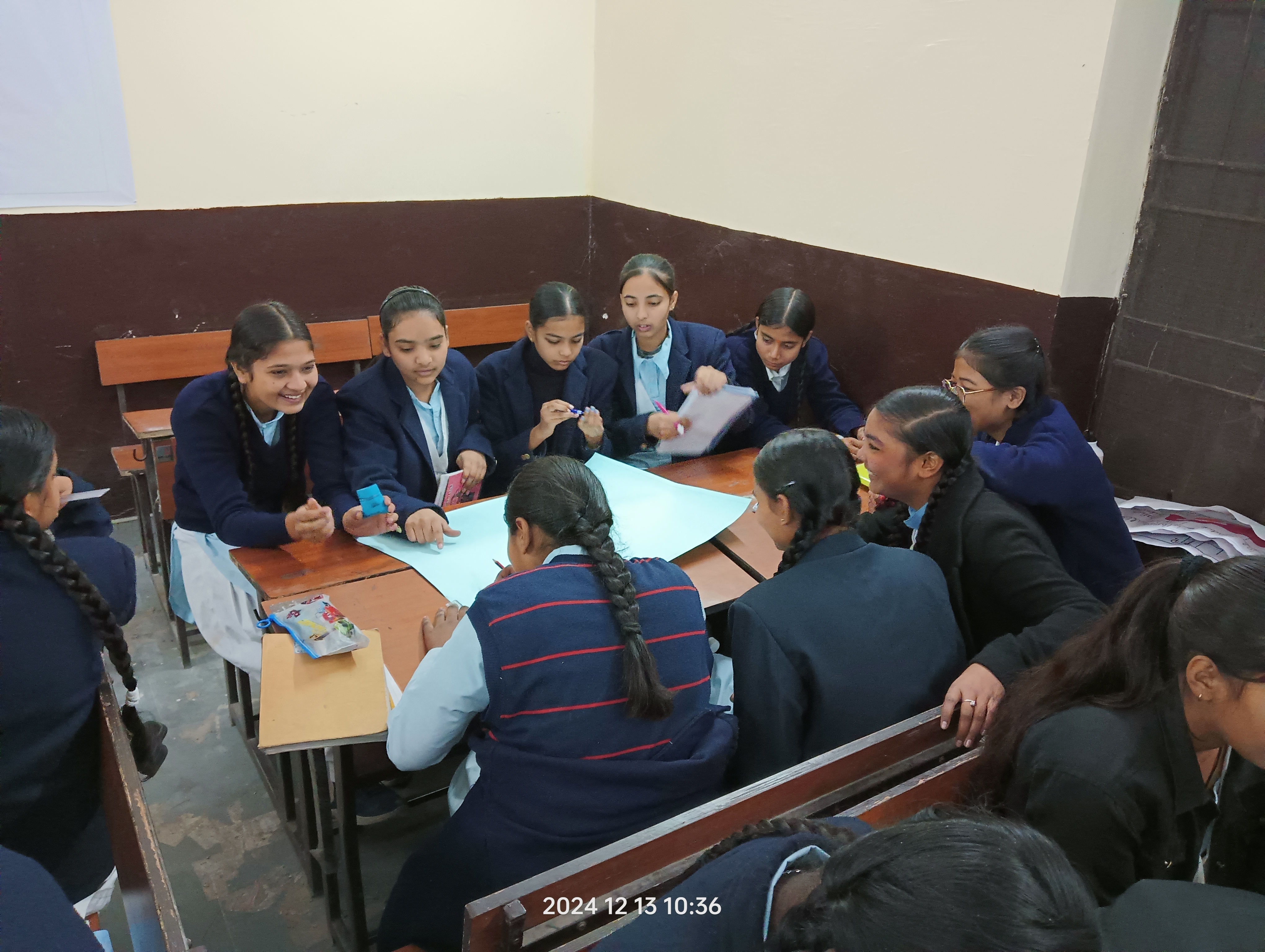
When Question Papers Reveal More Than Answers: Rethinking Assessment Through PARAKH’s Taxonomy
Parakh NCERT
- By Indrani Bhaduri
Assessment design strongly influences both classroom pedagogy and student learning. Question papers do not merely evaluate knowledge but also reflect the priorities and expectations of an education system. This blog draws on insights from a teacher workshop in which participants analyzed previous year board examination papers using PARAKH’s taxonomy. The analysis revealed a significant imbalance, with nearly ninety percent of questions falling within the Awareness domain, largely focused on definitions and basic examples. Questions addressing the Sensitivity and Creativity domains, such as those involving conflict resolution, real life problem solving, and idea generation, were largely absent.
The blog argues that such assessment patterns often reinforce rote learning practices in classrooms. Drawing on the framework proposed by PARAKH and the Equivalence of Assessment across State Boards Report, it emphasizes the need for balanced question papers that assess awareness, sensitivity, and creativity, thereby promoting holistic and meaningful learning among students.
Strengthening Curriculum Through Multilingual Evidence
Parakh NCERT
- By Indrani Bhaduri
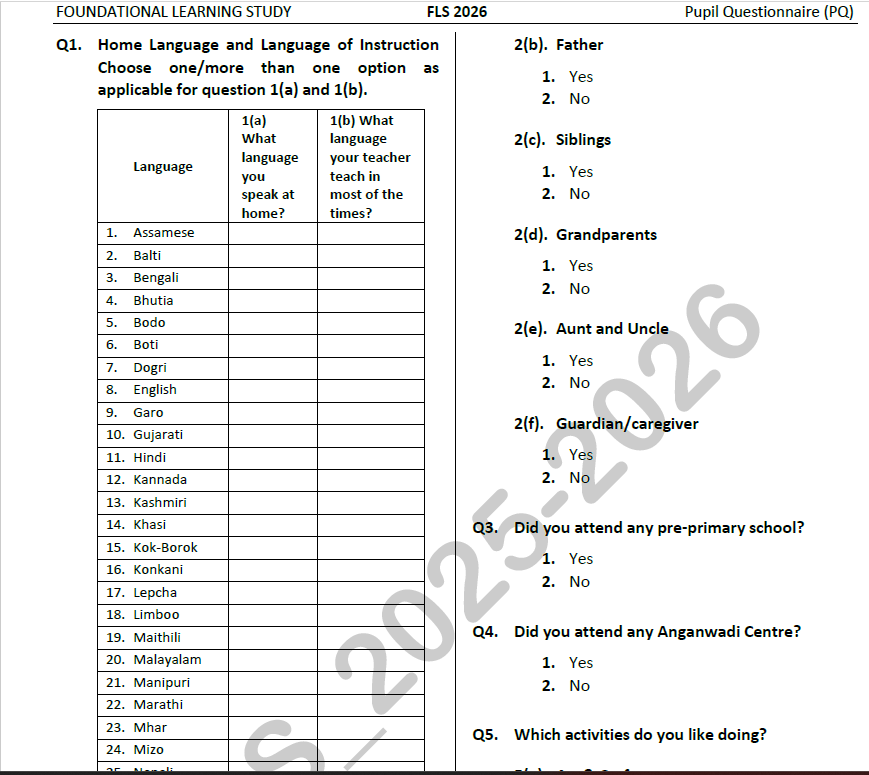
The inclusion of multilingual components in foundational learning studies is more than a technical reform. It represents a cultural shift, as envisioned in NEP (2020), in how assessment is imagined in India. Through national level assessments conducted in several languages, PARAKH is laying the groundwork for an assessment ecosystem that is fair, representative, and inclusive. By giving space to multiple languages in curriculum and evaluation, it ensures that education in India speaks to every child in the language they understand best.
Rethinking the Foundations of Literacy in FLN
Parakh NCERT
- By Indrani Bhaduri
Foundational Literacy and Numeracy is often reduced to early reading and writing outcomes. PARAKH repositions literacy as a meaning-making process that begins before print, rooted in listening, oral language, and everyday engagement with spoken and written language. Children arrive at school with rich linguistic resources. They listen, understand, and respond to language long before they read independently. Strong FLN frameworks build on these emergent behaviours rather than rushing children into print-based performance.
This blog highlights listening comprehension and sound awareness as critical predictors of later reading success, especially in multilingual classrooms. Reading is framed as reading for meaning, not accuracy alone, while early writing is understood as thinking made visible. Aligned with NEP 2020, PARAKH argues for early, meaningful assessment that supports confident, capable, and engaged learners.
Dashboard Links
Contact Info
Sri Aurobindo Marg, New Delhi-110016, India