Government of India
 More
More

Our Blogs

Strengthening Curriculum Through Multilingual Evidence
-
2026-03-03 12:00:00
-
Parakh NCERT
- By Indrani Bhaduri
India’s evolving education landscape has placed multilingualism at the heart of reform, and one of the most significant steps in this direction is being led by PARAKH. In alignment with the National Education Policy 2020 (NEP, 2020), PARAKH is redefining how learning outcomes are assessed across the country. A key feature of this transformation is the deliberate inclusion of multilingualism in national level studies, especially within foundational learning.
Strengthening Curriculum Through Multilingual Evidence
Language can either include or exclude. By embedding multilingualism into assessment design, PARAKH promotes educational equity. Students from rural, tribal, and minority language communities gain equal opportunity to showcase their competencies.
When national studies are conducted in multiple languages, policymakers receive more accurate evidence and nuanced insights into learning gaps. This enables curriculum planners to design interventions that genuinely reflect learners’ needs rather than assumptions based on limited linguistic representation.
Multilingual assessments also support teachers. When evaluation systems recognize different languages, teachers are empowered to use bilingual and multilingual strategies in classrooms. This supports smoother transitions from home language to additional languages, instead of forcing abrupt linguistic shifts.
Importantly, multilingual assessment signals institutional respect for linguistic diversity. It affirms that all languages hold academic legitimacy and cognitive value. Such recognition strengthens learner identity and fosters belonging within the education system.
Reimagining Assessment in a Multilingual Nation
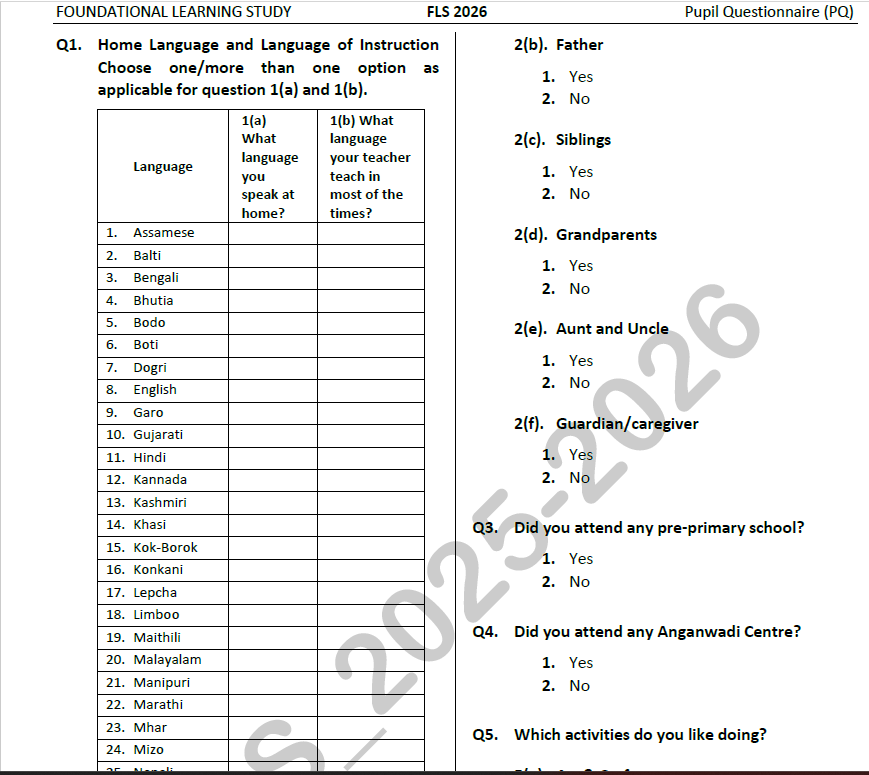
India is home to hundreds of languages and dialects. For decades, large scale assessments often prioritized dominant languages, inadvertently limiting equitable participation. PARAKH addresses this gap by designing assessment, such as through the National Foundational Learning Study (FLS) and PARAKH Rashtriya Sarvekshan, in multiple Indian languages. By doing so, it ensures that students are assessed in languages that are familiar and meaningful to them.
This approach reflects a simple but powerful principle: learning is strongest when it is rooted in one’s linguistic context. When assessments are available in several languages, children can demonstrate their understanding without the added barrier of translating thoughts from one language to another.
Opening Doors to Many Languages Through Assessment
The Foundational Learning Study (FLS) under PARAKH goes beyond measuring literacy and numeracy. It creates structured components that allow space for diverse languages to enter the curriculum. This is especially significant at the foundational stage, where language shapes cognitive development, comprehension, and confidence.
The study was conducted in 20 languages used as mediums of instruction across States and Union Territories: Assamese, Bengali, Bodo, English, Garo, Gujarati, Hindi, Kannada, Khasi, Konkani, Malayalam, Manipuri, Marathi, Mizo, Nepali, Odia, Punjabi, Tamil, Telugu and Urdu.
Similarly, PARAKH Rashtriya Sarvekshan (PRS) was designed to assess schools as comprehensive entities, focusing on the overall health of the education system across 782 districts of the country. By conducting PRS in 23 languages, PARAKH attempted to ensure that learners from diverse linguistic backgrounds could participate meaningfully, without linguistic disadvantage affecting performance.
Key features include:
- Assessment tools developed in multiple Indian languages
- Contextual content reflecting local cultures and linguistic realities
- Literacy components that value mother tongue proficiency
- Frameworks encouraging states to adapt materials in regional languages
- Activities that work with phonics at foundation level (including that of home languages)
Alignment with competency-based assessment principles under NEP 2020
By integrating multilingual components into foundational assessments, PARAKH ensures that language diversity is not treated as a challenge but as an educational resource.
Contextualization, Not Translation
An important aspect of PARAKH’s multilingual approach is that test development is not limited to direct translation. Multilingual test items and assignments are developed in collaboration with in-service teachers, teacher educators, and officials at the state level. This ensures that tasks are contextualized and authentic rather than mechanically translated.
Such collaboration strengthens validity. Questions are framed in culturally and linguistically meaningful ways, preserving the cognitive demand of the task while adapting it to local contexts. This also builds capacity within states, encouraging ownership of assessment processes.
A Step Towards a Linguistically Inclusive Future
The inclusion of multilingual components in foundational learning studies is more than a technical reform. It represents a cultural shift, as envisioned in NEP 2020, in how assessment is imagined in India. Through national level assessments conducted in several languages, PARAKH is laying the groundwork for an assessment ecosystem that is fair, representative, and inclusive. By giving space to multiple languages in curriculum and evaluation, it ensures that education in India speaks to every child in the language they understand best.
Sustaining this vision requires that multilingual inclusion extend beyond large scale assessments into everyday educational practice. Linguistic diversity must be actively retained and nurtured within schools, with languages viewed as dynamic and interactive resources rather than arranged in rigid hierarchies. Learning spaces should allow students to move naturally between home and school languages, drawing upon their full linguistic repertoire to think, question, and create. Such flexibility strengthens comprehension, builds confidence, and affirms identity. When education systems recognize multiple languages as legitimate tools for meaning making, diversity is not merely accommodated but genuinely valued, nurtured, and promoted.
Explore More
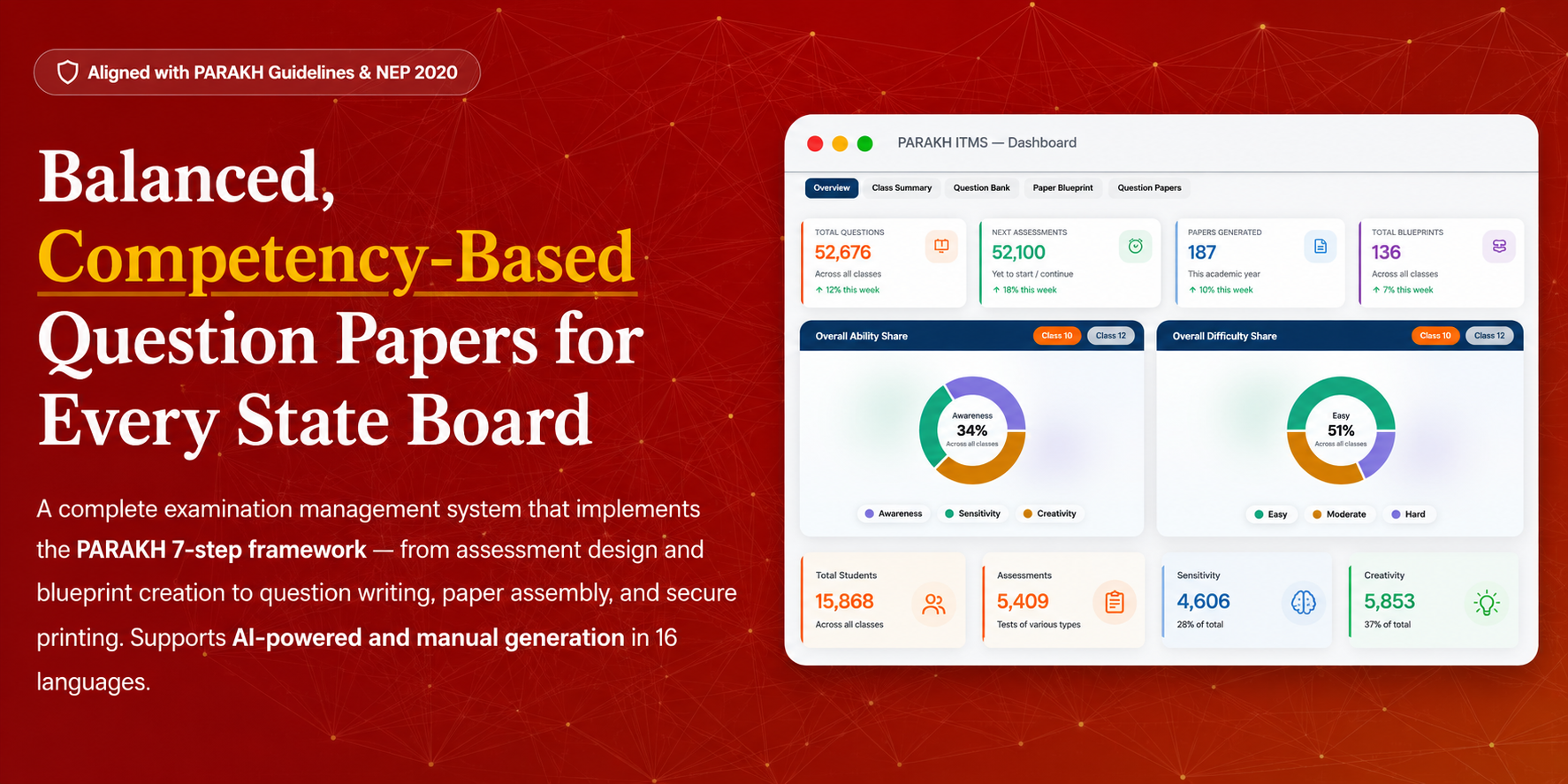
PARAKH ITMS: A Digital Ecosystem for Competency-Based and Multidisciplinary Assessment
Parakh NCERT
- By Indrani Bhaduri
Rethinking Assessment: How PARAKH is Digitising Every Step
Parakh NCERT
- By Indrani Bhaduri
Abhilasha, Pragati and Jagriti :A Roadmap to Educational Excellence
Parakh NCERT
- By Indrani Bhaduri
Holistic Progress Cards and Identity Development: From Knowing to Becoming
Parakh NCERT
- By Indrani Bhaduri