Government of India
 More
More

Our Blogs

Building Thinkers: Competency-Based Assessment for the Middle Stage

-
2026-06-22 12:00:00
-
Parakh NCERT
- By Indrani Bhaduri
The National Education Policy 2020 reoriented the purpose of assessment in Indian school education. It called for a clear movement away from rote memorisation, content-heavy examinations and narrow measures of achievement. NEP placed assessment within a broader vision of learning. Assessment is now seen as continuous, competency-based and developmentally responsive. It should support learning, inform pedagogy and recognise the holistic growth of every learner.
The Middle Stage is one of the most important phases in school education. It covers learners between the ages of 11 and 14 years. This stage usually includes Classes 6 to 8. It comes after the Preparatory Stage and before the Secondary Stage. It is a bridge between activity-based learning and deeper subject-based understanding. At this stage, children begin to think in more complex ways. They move from concrete experiences to abstract ideas. They start engaging with concepts, theories, patterns, evidence and explanations. Their ability to reason improves. Their language becomes more structured. They begin to ask deeper questions.
Within this reform vision, PARAKH was established as the National Assessment Centre under NCERT. PARAKH stands for Performance Assessment, Review and Analysis of Knowledge for Holistic Development. PARAKH provides a common platform for setting norms, standards and guidelines for student assessment across the country. Its work strengthens competency-based assessment, large-scale achievement surveys and tools such as the Holistic Progress Card. At the Middle Stage, the National Curriculum Framework gives strong importance to competency-based learning. It also focuses on outcome-based learning. To support this, the NCF recommends varied teaching and learning methods across subjects. These methods include experiential learning and discovery-based learning. They also include toy-based pedagogy, technology-enabled learning, art integration, sports integration, vocational exposure and community participation. These approaches make classroom learning more meaningful. They also make learning engaging and connected to real-life situations. The NCF also highlights the importance of vocational education at the Middle Stage. It encourages learners to develop practical skills. It helps them respect all forms of work. It also builds an understanding of the dignity of labour. This early exposure connects education with skills and future work opportunities.
NEP 2020 and PARAKH mark an important shift in assessment thinking. The focus moves from measuring what learners remember to understanding how they think, apply, reflect and grow. Because of this, assessment at the Middle Stage cannot remain limited to memory-based testing. It must move beyond asking learners to recall facts. It must examine whether learners can understand, apply, analyse, interpret, create and communicate. This is where competency-based assessment becomes essential.
Competency-based assessment focuses on what learners can do with what they know. It does not reject knowledge. Instead, it deepens the use of knowledge. A learner may remember a formula. But competency is seen when the learner can apply that formula to solve a real-life problem. A learner may know a scientific concept. But competency is shown when the learner can use observation, evidence and reasoning to explain a phenomenon. A learner may read a story. But competency is reflected when the learner can interpret its meaning, connect it with social life and express a thoughtful response.
PARAKH sees Holistic Progress Card as an important step in transforming India’s assessment culture. It aims to help learners develop essential competencies and critical skills. It also supports lifelong learning habits. All stakeholders are encouraged to adopt the HPC for the Middle Stage. It can serve as a meaningful tool for holistic and competency-based education. The Holistic Progress Card for the Middle Stage is a comprehensive reporting system. It records learners’ progress in relation to curricular goals, competencies and learning outcomes. It moves beyond marks-based reporting. It presents a wider picture of a child’s development. The HPC promotes holistic and innovative practices in schools. It also supports transformative pedagogical approaches. It encourages teachers to create active and collaborative learning opportunities. These opportunities should also be inclusive. The HPC integrates toy-based pedagogy, art, sports, technology, vocational learning, and community engagement. These elements support the overall development of learners. They also prepare students for the Secondary Stage.
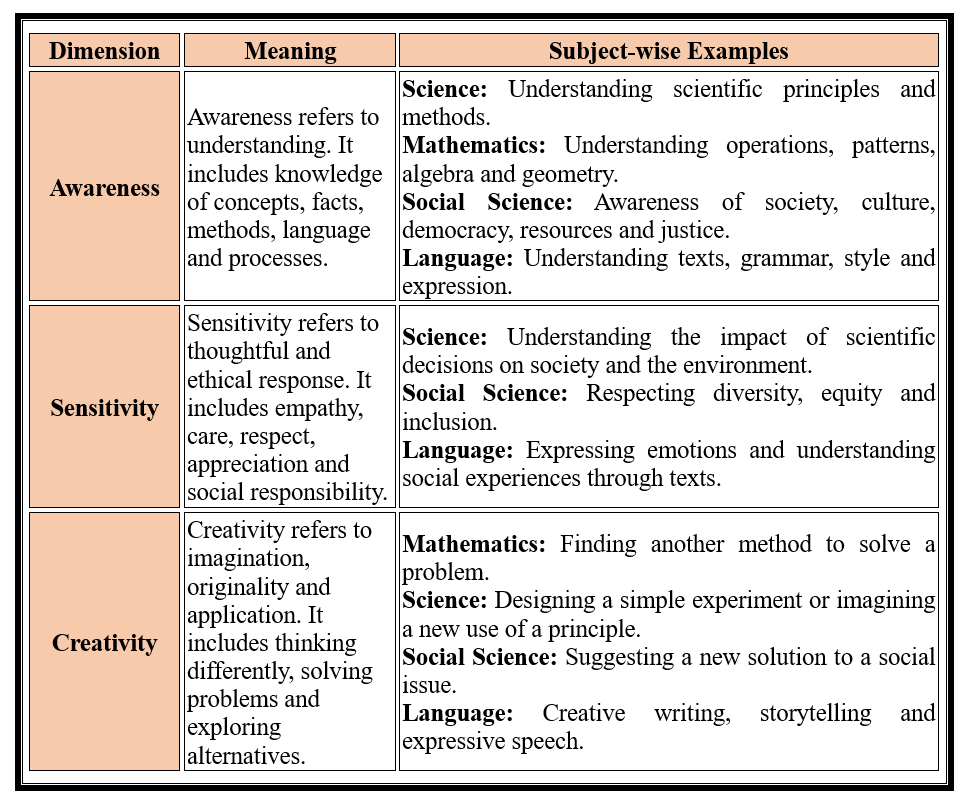
The HPC uses three progressive performance levels: Beginner, Proficient and Advanced. A Beginner learner may need additional support and guidance. A Proficient learner shows progress but may still require some support. An Advanced learner can perform independently or with minimal support. These levels are not meant to label children permanently. Instead, they help teachers understand each learner’s current stage and identify the next step for improvement. These levels are progressive. They help teachers identify the next step for each learner. This is important because learners do not develop equally in all areas. A student may be advanced in mathematical awareness but may still need support in mathematical creativity. Another student may be proficient in scientific awareness but advanced in scientific sensitivity. A learner may be strong in oral expression but need support in writing. The HPC allows this variation to be recorded. It recognises that learning is not one-dimensional.
PARAKH Rashtriya Sarvekshan also strengthens the competency-based approach. It is a large-scale national survey that helps understand learning levels across stages. Class 6 is especially important because it stands at the entry point of the Middle Stage. It shows whether learners are ready for deeper subject-based learning after the Preparatory Stage. In PARAKH Rashtriya Sarvekshan 2024, Class 6 learners were assessed in Language, Mathematics and Social Science. These areas are closely connected with the competencies needed at this stage.
The Middle Stage curriculum includes many areas of learning. Students study three languages, Mathematics, Science, Social Science, Art Education, Physical Education and Vocational Education. Each of these areas develops a different form of knowledge. Each subject also has its own method of inquiry. Science encourages observation, experimentation, evidence and explanation. Mathematics develops logic, patterns, abstraction and problem-solving. Social Science builds understanding of society, culture, history, geography, democracy, justice and diversity. Language Education strengthens listening, speaking, reading, writing, expression and interpretation. Art Education nurtures appreciation of cultural and artistic diversity. Physical Education supports health, coordination, teamwork and discipline. Vocational Education introduces learners to skill-based understanding and productive work. This diversity of learning requires a diverse approach to assessment.
A single written test cannot capture the full growth of the learner. At the Middle Stage, learners should be assessed through oral responses, written responses, projects, experiments, investigations, role plays, debates, presentations, journals, portfolios, peer work, self-reflection and teacher observation. Regular assessments may include MCQs and constructed responses. But the purpose should be clear. These questions should test conceptual understanding and higher-order thinking. Pedagogy at the Middle Stage needs balance. Direct instruction is important for clear explanations, examples and guided practice. At the same time, learners need space for exploration and inquiry. They should ask questions, test ideas, make mistakes and learn from them. Assessment should reflect this balance. In Mathematics, it should focus on reasoning, problem-solving and multiple methods. In Science, it should include experiments, observations and investigations linked to daily life. In Social Science, it should promote interpretation, empathy and reflection on social issues. In Language Education, it should assess reading, writing, speaking, listening and clear expression of ideas.
At the Middle Stage, formative assessment may include classroom questions, peer feedback, self-assessment, group tasks, notebooks, journals, presentations, practical work and portfolios. These methods give a fuller picture of learning. Self-assessment helps students reflect on their own progress. They learn what they understand, where they need support and which strategies work for them. This builds self-regulation and responsibility. Peer assessment also supports collaborative learning. Students learn to listen, respect different views and give constructive feedback. However, it should be carefully guided. It must focus on improvement, cooperation and shared learning, not criticism or comparison.
The Middle Stage is not only about cognitive growth. It is also about emotional and social development. Learners at this stage experience changes in self-understanding. They begin to compare themselves with others. They become more aware of pride, shame, confidence, anxiety and peer approval. Their friendships become stronger. Peer groups begin to influence behaviour, learning and emotional development. Families continue to play an important role, but peers become more visible in their daily life. Assessment must recognise this reality. It should not create fear, shame or unhealthy competition. It should support confidence, reflection and improvement. A learner should be able to see assessment as a tool for growth. Teachers should use assessment to understand the learner better. They should identify strengths, learning gaps, emotional needs and social participation.
The Middle Stage is a time of questioning, reasoning and discovery. They are ready to connect ideas. They are ready to explore, discuss, debate and create. Assessment must honour this stage of development. It must encourage curiosity instead of fear. It must value thinking instead of memorisation. It must support creativity instead of uniform answers. The Middle Stage is not only a bridge between childhood and adolescence. It is a powerful phase where learners begin to think deeply, question meaningfully and apply knowledge with confidence. Through competency-based assessment and the Holistic Progress Card, education can move beyond marks and memory. It can recognise every child’s growth, effort, creativity and potential. PARAKH’s vision reminds us that assessment should not limit learners. It should guide them, support them and inspire them. When assessment becomes holistic, learning becomes more humane, meaningful and future-ready!
How To Fill HPC: Middle Level
Explore More

Secondary Stage Education: Preparing Learners for Choice, Competence and Life
Parakh NCERT
- By Indrani Bhaduri
From Curiosity to Competency: PARAKH at the Preparatory Stage
Parakh NCERT
- By Indrani Bhaduri

Assessment at the Foundational Stage captures not just what children know, but who they are becoming.
Parakh NCERT
- By Indrani Bhaduri
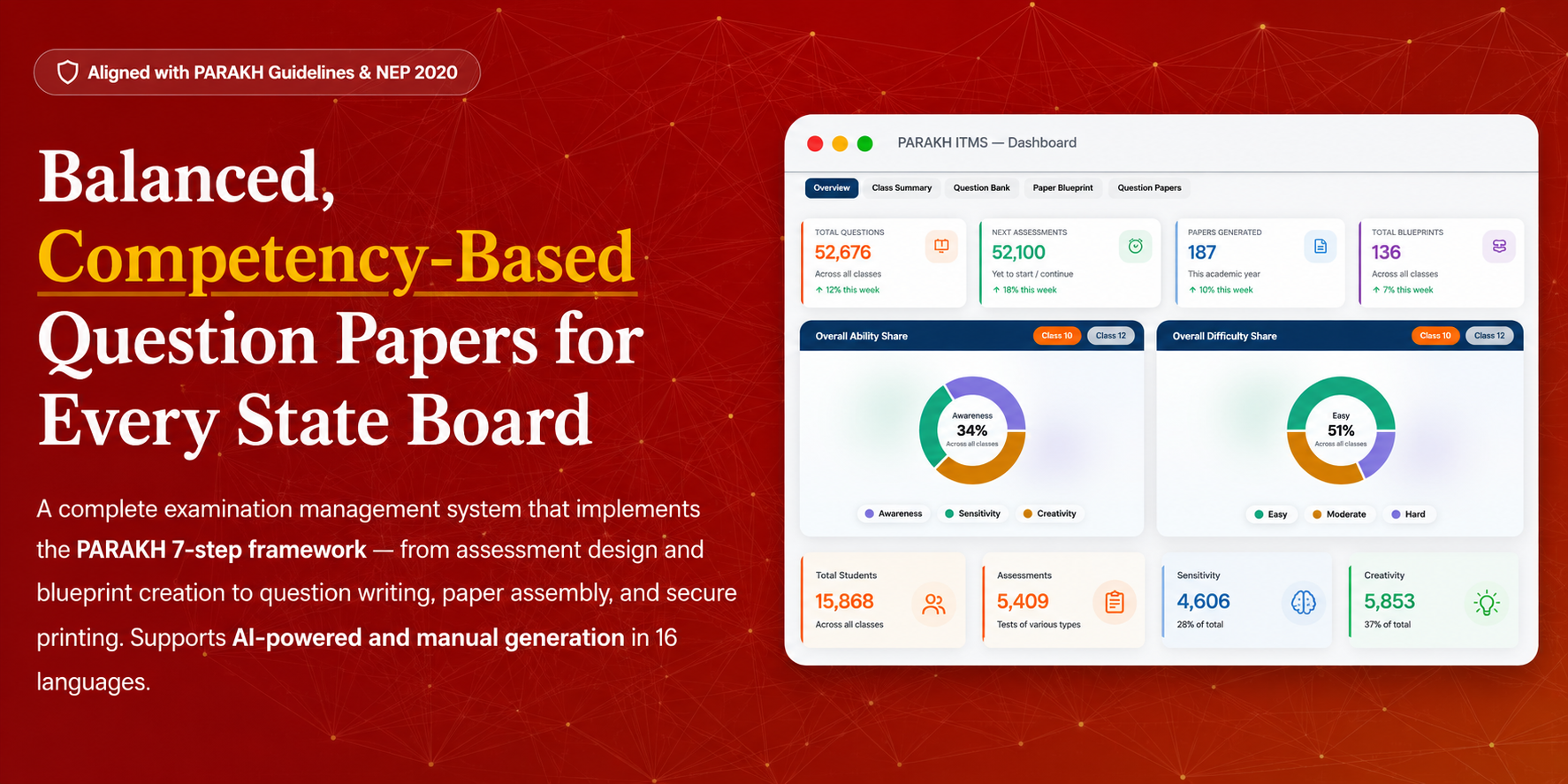
PARAKH ITMS: A Digital Ecosystem for Competency-Based and Multidisciplinary Assessment
Parakh NCERT
- By Indrani Bhaduri