Government of India
 More
More

Our Blogs

Aligning Assessment with the Goals of Education
-
2026-03-13 12:00:00
-
Parakh NCERT
- By Indrani Bhaduri
In discussions on examination design, the idea of creating a “balanced question paper” is often interpreted in technical terms. Paper setters usually focus on balancing the types of questions included, such as multiple choice, short answer, and long answer questions. Balance may also refer to adequate coverage of syllabus units or distribution of marks across different topics. While these aspects are important for fairness and structure, they do not fully capture the deeper purpose of balance in assessment.
True balance in question papers must reflect the broader goals that education systems seek to achieve for their students. Schools do not aim only to ensure that learners memorize textbook content. Education is expected to prepare young people to understand their environment, recognize challenges within their communities, and contribute meaningfully to society. Students should be able to identify problems that affect their surroundings, consider possible solutions, collaborate with others, and reflect critically on different perspectives. These capacities are essential for preparing responsible citizens who can participate actively in social and national development.
However, such abilities cannot suddenly emerge when students reach the end of their schooling. Skills such as collaboration, negotiation, open mindedness, and problem solving develop gradually and require continuous support through classroom practices and assessment systems. Question papers play an important role in shaping these practices because they signal to both teachers and students what kinds of learning are valued.
Assessment plays a crucial role in shaping these opportunities. If examinations focus only on recall of textbook information, students receive the message that memorization is the primary goal of learning. Conversely, when assessments encourage reflection, interpretation, problem solving, and creative thinking, they signal that education values deeper understanding and responsible participation in society.
Designing balanced question papers is therefore essential for supporting these broader learning goals. A well-structured examination should include questions that assess not only awareness of concepts but also students’ ability to engage with real life situations and generate ideas. Within frameworks such as PARAKH’s taxonomy, this balance can be understood through the inclusion of questions across three domains: awareness, sensitivity, and creativity. Awareness based questions focus on knowledge and understanding of concepts. Sensitivity based questions encourage students to reflect on situations involving diverse perspectives, collaboration, and conflict resolution. Creativity based questions invite learners to generate ideas, combine knowledge in new ways, and propose innovative solutions.
Including questions across these domains helps cultivate learners who are both intellectually capable and socially responsible. Students begin to recognize and address conflicts within themselves and among individuals or groups. They develop the ability to identify the sources of disagreement and consider constructive strategies for negotiation and resolution. At the same time, they learn to approach problems with imagination and flexibility, exploring possibilities rather than simply repeating known answers.
Balanced question papers thus play a significant role in shaping the character of an education system. They ensure that assessment reflects the broader aims of education, including critical thinking, empathy, collaboration, and creativity. By thoughtfully designing examinations that go beyond recall based questions, educators can help nurture individuals who are prepared not only for academic success but also for meaningful participation in society.
Explore More
Holistic Progress Cards and Identity Development: From Knowing to Becoming
Parakh NCERT
- By Indrani Bhaduri
More Than a Report Card: The Idea Behind Holistic Progress Cards
Parakh NCERT
- By Indrani Bhaduri
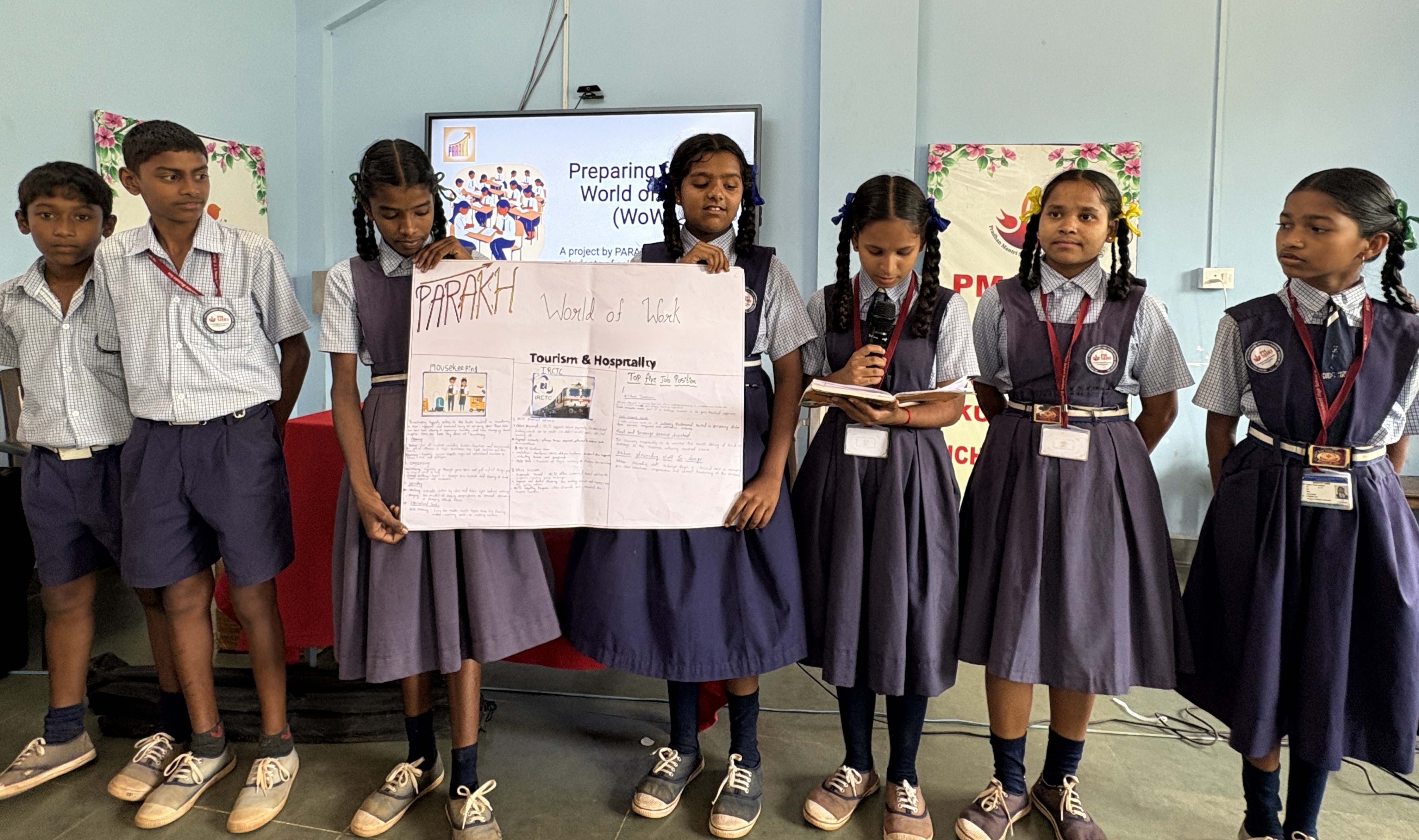
Holistic Progress Cards invite 6th graders to reflect on their ambitions. Is it too early? Not necessarily.
Parakh NCERT
- By Indrani Bhaduri
Balanced Question Papers: Why Assessment Design Matters
Parakh NCERT
- By Indrani Bhaduri