Government of India
 More
More

Our Blogs

Assessing Creativity Without Killing It
-
2026-01-22 12:00:00
-
Parakh NCERT
- By Indrani Bhaduri
Assessing Creativity Without Killing It
For years, creativity was treated like a rare talent--you either had it or you didn’t!
Modern research and assessment frameworks, including PARAKH’s taxonomy, challenge this myth. Creativity is no longer seen as a magical spark; it is a learnable, assessable, and essential competency that can be nurtured in every learner.
What Does Creative Thinking Look Like in the Classroom?
Young children are naturally creative. They ask “why” endlessly, imagine freely, and experiment without fear. Somewhere along the school journey, many begin to hesitate. Research shows this often happens when learning becomes overly focused on fixed answers and marks. When students feel there is only one correct response, creativity quietly steps aside.
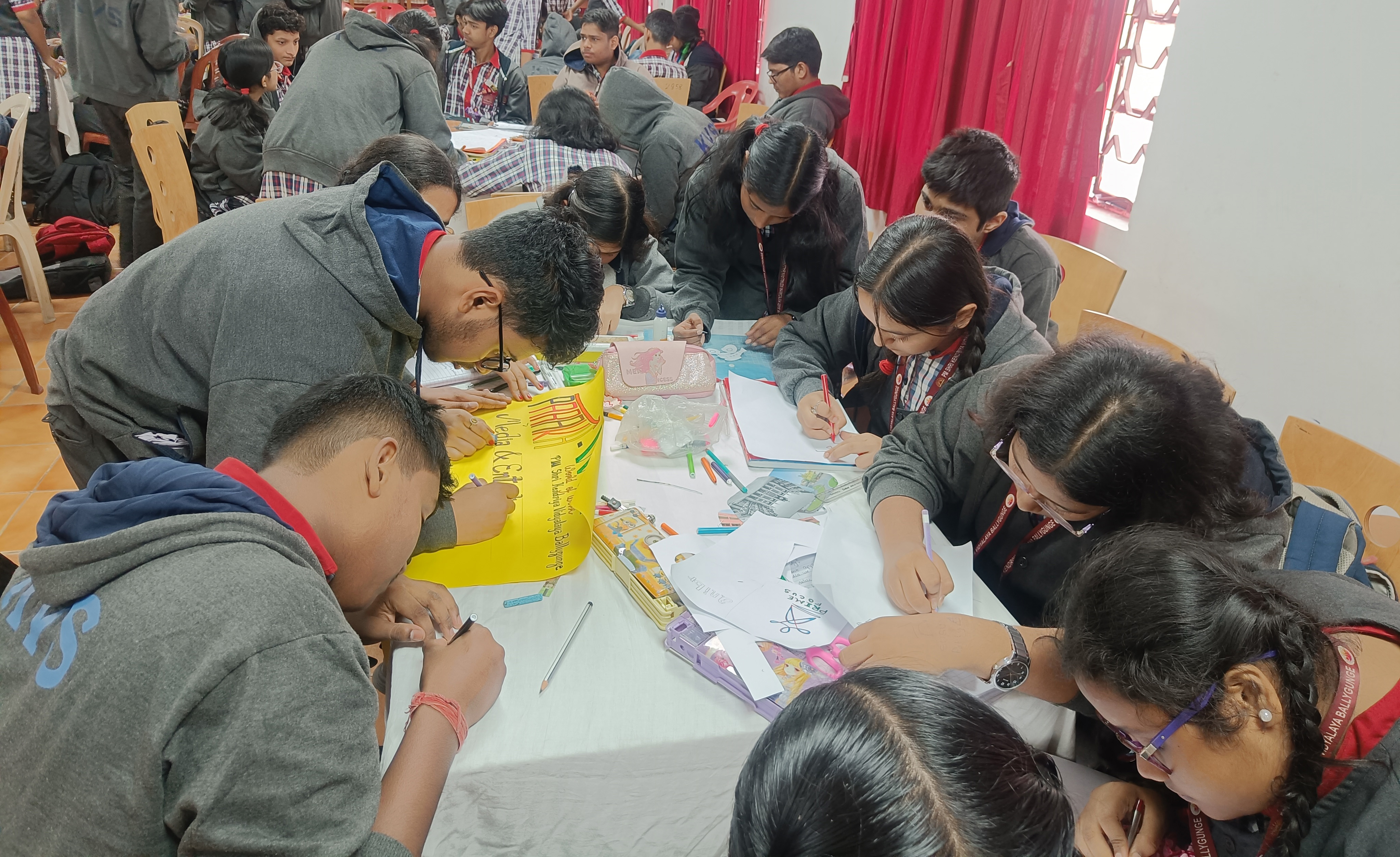
Creativity does not require fancy projects or extra periods. It shows up when a child explains a science concept using a cricket example, when students suggest different endings to a story, or when a group debates on the method that works best in mathematics. These moments are not distractions--they are evidence of deeper thinking.
In PARAKH-aligned classrooms, creativity may look like:
• Writing an alternative ending to a historical event
• Converting a narrative into a poem
• Writing a historical account from a popular historical figure’s perspective
• Creating simulations or presentations instead of standard answers
• Designing a water-conservation plan for the local community
PARAKH recognises such thinking as higher-order learning, where students generate ideas, apply concepts, and make original connections. Creativity, here, is not chaos--it is structured freedom.
Creativity through the PARAKH lens
One common fear is that assessment stifles creativity. PARAKH addresses this by promoting rubrics, open-ended tasks, and performance-based assessments in Holistic Progress Cards. PARAKH’s taxonomy provides a clear and comprehensive framework to understand creativity by identifying its key components:
• Generating innovative ideas
• Flexibility
• Fluency
• Exploration
• Combining ideas and concepts
This taxonomy aligns strongly with the vision of the National Education Policy (NEP) 2020 and marks a fundamental shift towards competency-based assessments.
Going beyond “What is…?” and asking “What if…?” and “Why not…?” questions
At the core of creativity is the ability to generate innovative ideas. In today’s world, where routine tasks are increasingly automated, originality and innovation are highly valued. Learners must be able to think beyond standard answers and propose new solutions to real-life challenges such as climate change, digital ethics, and social inequality.
Flexibility, another dimension of creativity, is especially relevant in a rapidly changing global context. Careers, technologies, and societal needs evolve constantly, requiring individuals to adapt their thinking and strategies. Flexible learners can shift perspectives, reconsider assumptions, and respond constructively to feedback.
Fluency, or the ability to generate multiple ideas, plays a vital role in problem-solving and decision-making. In uncertain situations, having many possible ideas increases the chances of finding effective and innovative solutions. Classroom practices such as brainstorming, open-ended questioning, and project-based learning--strongly recommended by NEP 2020--encourage fluency.
The dimension of exploration reflects curiosity and a willingness to inquire deeply. In today’s information-rich world, the ability to question, investigate, and evaluate information critically is crucial. Exploration sets up the stage for engaging deeply with the content as well as promotes reflexive thinking in learners.
Finally, the ability to combine ideas and concepts underscores the importance of synthesis and integrative thinking, enabling learners to develop holistic perspectives and coherence in understanding knowledge. PARAKH’s emphasis on combining ideas strongly resonates with the NCF 2020’s focus on holistic development, coherence in learning, and cross-curricular integration.
Ultimately, creativity in the PARAKH framework prepares students for a future that demands adaptability and problem-solving. For teachers, nurturing creativity is an investment in learners’ ability to think critically, respond thoughtfully, and act responsibly beyond the classroom.
By embedding creativity into everyday teaching, educators do more than complete a curriculum--they empower learners to imagine and shape a better world.
Explore More
Aligning Assessment with the Goals of Education
Parakh NCERT
- By Indrani Bhaduri
When Question Papers Reveal More Than Answers: Rethinking Assessment Through PARAKH’s Taxonomy
Parakh NCERT
- By Indrani Bhaduri
Strengthening Curriculum Through Multilingual Evidence
Parakh NCERT
- By Indrani Bhaduri
Rethinking the Foundations of Literacy in FLN
Parakh NCERT
- By Indrani Bhaduri