Government of India
 More
More


Our Blogs

Rethinking Assessment: How PARAKH is Digitising Every Step
-
2026-06-04 12:00:00
-
Parakh NCERT
- By Indrani Bhaduri
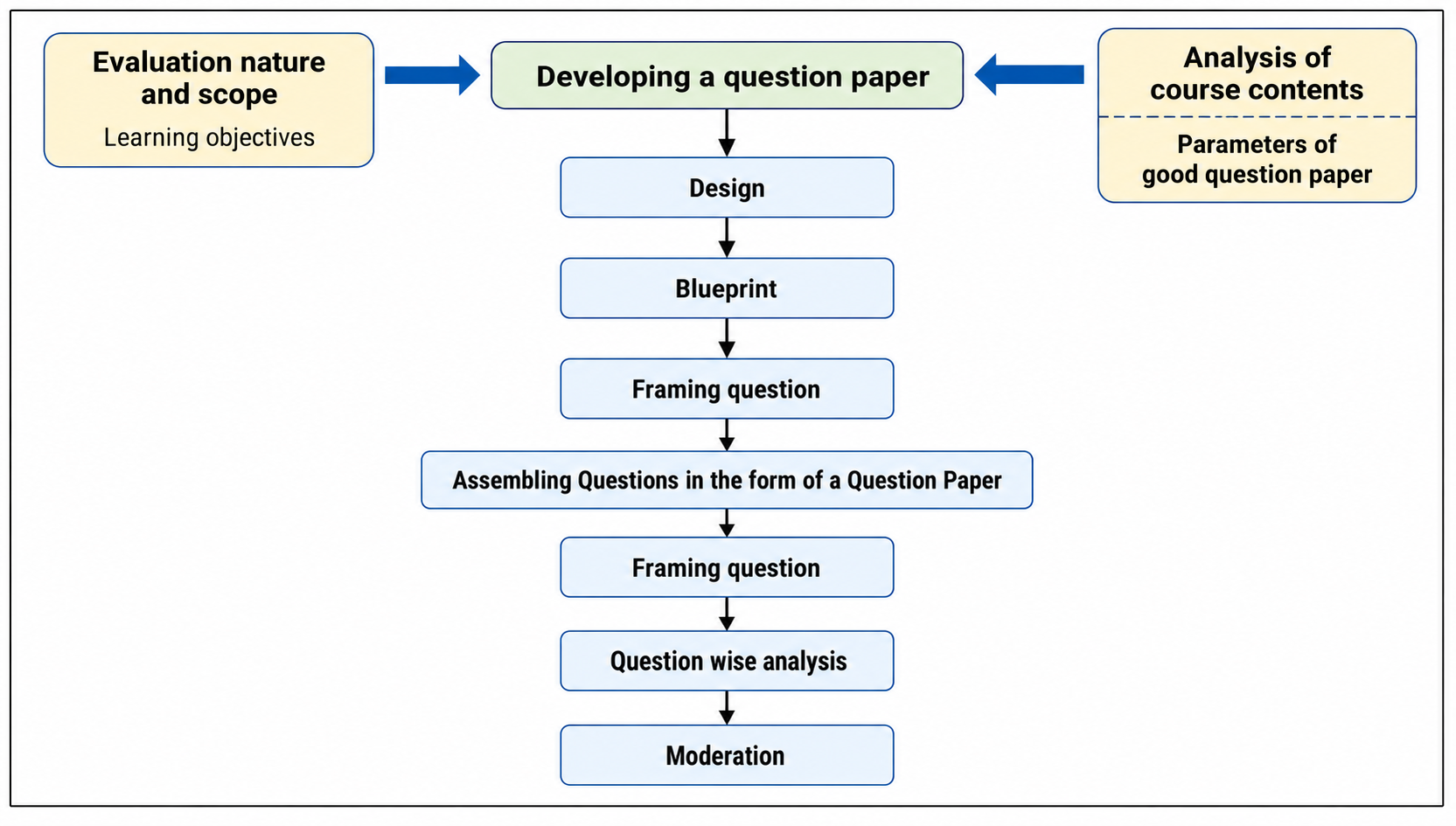
As the national assessment regulator established by NCERT, Performance Assessment, Review, and Analysis of Knowledge for Holistic Development (PARAKH) aims to strengthen assessment practices. Digitisation supports this goal by reducing reliance on manual processes and enabling efficient tracking, review, and monitoring. It also enhances accountability and consistency. In addition, digitisation supports the development of competency-based assessments that are aligned with current educational priorities. Recognising the need for quality assessment practices, PARAKH has introduced a structured 7-Step Framework. The framework provides clear guidance for every stage of assessment development. It helps ensure that assessments are designed according to established standards and expectations. By integrating digitisation into the process, these steps become easier to implement, monitor, and manage.
- Building the Foundation: Assessment Design
Every assessment begins with careful planning. At this stage, assessment developers decide what needs to be assessed and how it should be assessed. Each question is linked to specific competencies grouped under three broad areas: Awareness, Sensitivity, and Creativity. Awareness focuses on students' understanding of concepts and processes. Sensitivity relates to qualities such as collaboration, open-mindedness and conflict resolution. Creativity encourages innovation, flexibility, exploration, and original thinking. Questions are also classified according to their level of difficulty. They may be categorized as easy, moderate or difficult. Competency codes are assigned to each item and the expected time required to answer the question is estimated. This helps create a balanced assessment that reflects a range of learning outcomes.The design document should clearly state the following five major recommendations.
- Creating an Assessment Blueprint
Once the assessment design is complete, a blueprint is prepared. The blueprint serves as a guide for the entire assessment. It outlines how marks will be distributed across learning objectives, content areas and question types. The blueprint also provides details such as chapter-wise weightage, competency mapping, marks allocation and language-specific instructions. Additional features, including chapter-by-ability matrices, model paper previews, summary reports and PDF exports, help assessment developers maintain consistency throughout the process.
- Preparing Meaningful Questions
Question development is one of the most important stages of assessment creation. Questions should be clear, relevant and aligned with the intended learning outcomes. Depending on the assessment requirements, developers can create objective, short-answer or long-answer questions. Stimulus material may also be included where appropriate. Each question can be linked to a specific competency and assigned an estimated answering time. Accessibility and inclusivity are also considered during the review process. The platform supports question development in multiple languages, allowing authors to create and review content in English, Hindi, Tamil, Telugu, Bengali, and several other languages.
- Bringing the Question Paper Together
After the questions have been prepared, attention shifts to mark allocation. Marks are assigned in accordance with the assessment blueprint and learning objectives. This ensures that the importance of different content areas and competencies is reflected appropriately. The system also checks whether section-wise weightages match the approved blueprint. Such checks help maintain balance and reduce the likelihood of errors during paper construction.
- Preparing the Scoring Key
A clear marking scheme is essential for fair evaluation. The scoring key specifies how marks will be awarded for each question. It ensures that evaluation remains consistent across different examiners. The marking scheme is aligned with the assessment blueprint and verifies that marks have been distributed appropriately. This contributes to transparency and reliability in the evaluation process.
- Reviewing Each Question
Before the question paper is finalized, every question undergoes a detailed review. Reviewers examine whether questions align with the intended competencies, content areas, and quality standards. They also check for clarity, appropriateness, and balance. The review process is supported by analytical reports that provide insights into subject-wise distribution, language use, difficulty levels, and assessment patterns. Such information helps identify areas that may require revision and supports ongoing improvement in assessment quality.
- Ensuring Quality through Moderation
The final stage involves moderation. During moderation, the complete question paper is reviewed against the approved blueprint and assessment specifications. This helps ensure that all requirements have been met before the paper is finalized. Reviewers can examine model papers in multiple languages and compare versions side by side. Formatting options and font controls help improve readability during the review process. Questions can also be activated or deactivated without being removed from the question bank. This allows developers to retain items for future use while maintaining flexibility during paper generation.
Explore More
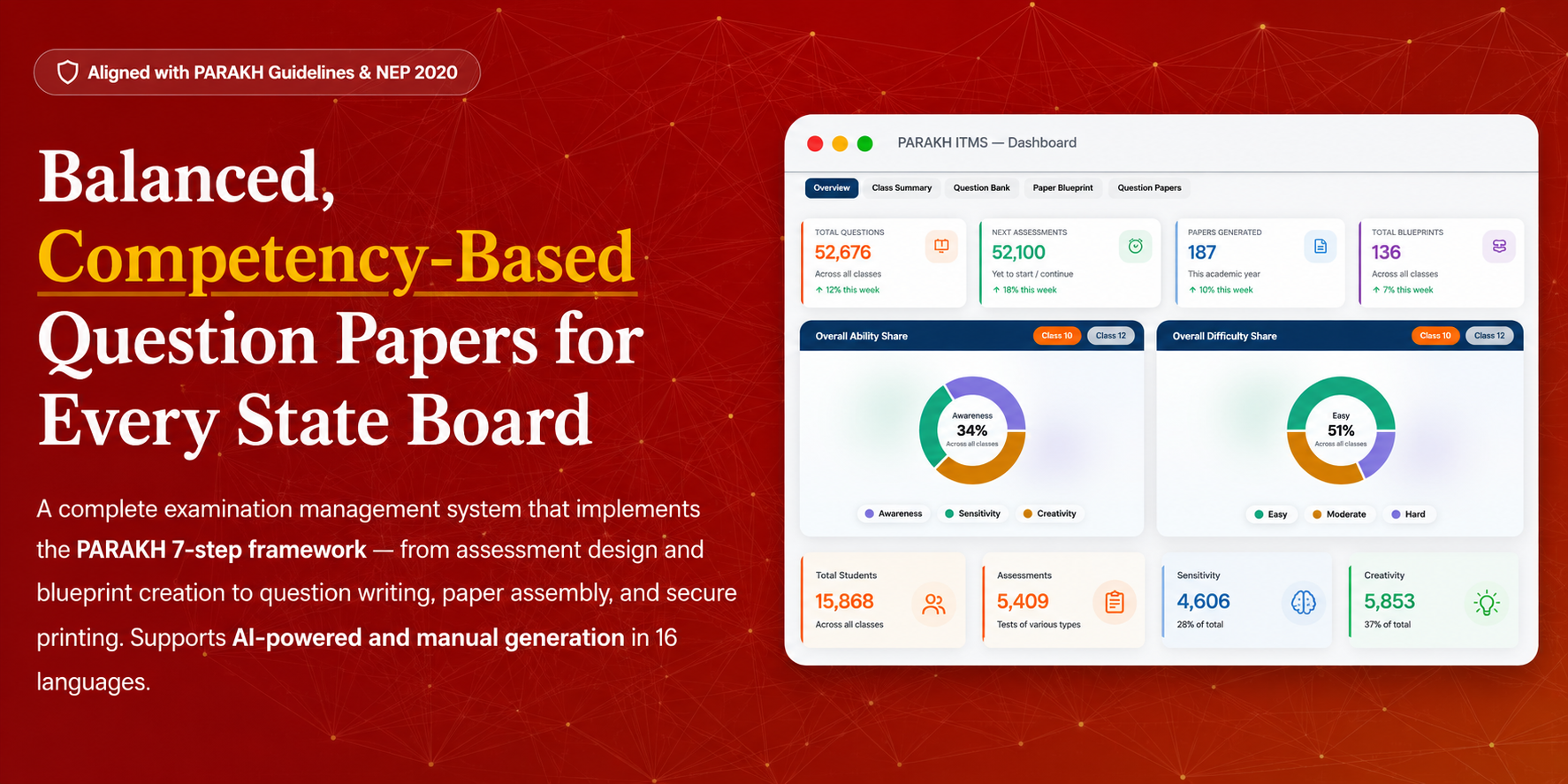
PARAKH ITMS: A Digital Ecosystem for Competency-Based and Multidisciplinary Assessment
Parakh NCERT
- By Indrani Bhaduri
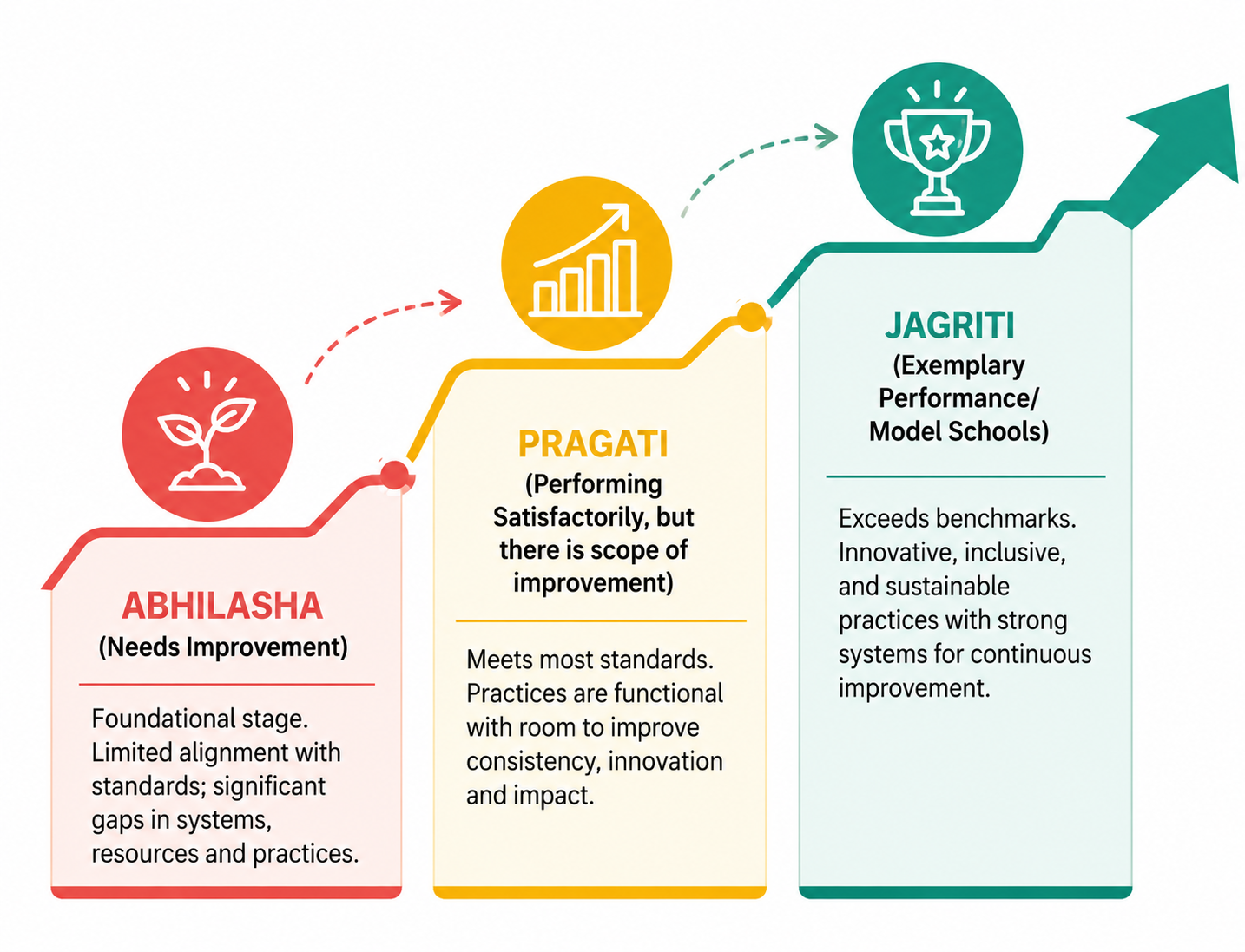
Abhilasha, Pragati and Jagriti :A Roadmap to Educational Excellence
Parakh NCERT
- By Indrani Bhaduri

Holistic Progress Cards and Identity Development: From Knowing to Becoming
Parakh NCERT
- By Indrani Bhaduri

More Than a Report Card: The Idea Behind Holistic Progress Cards
Parakh NCERT
- By Indrani Bhaduri